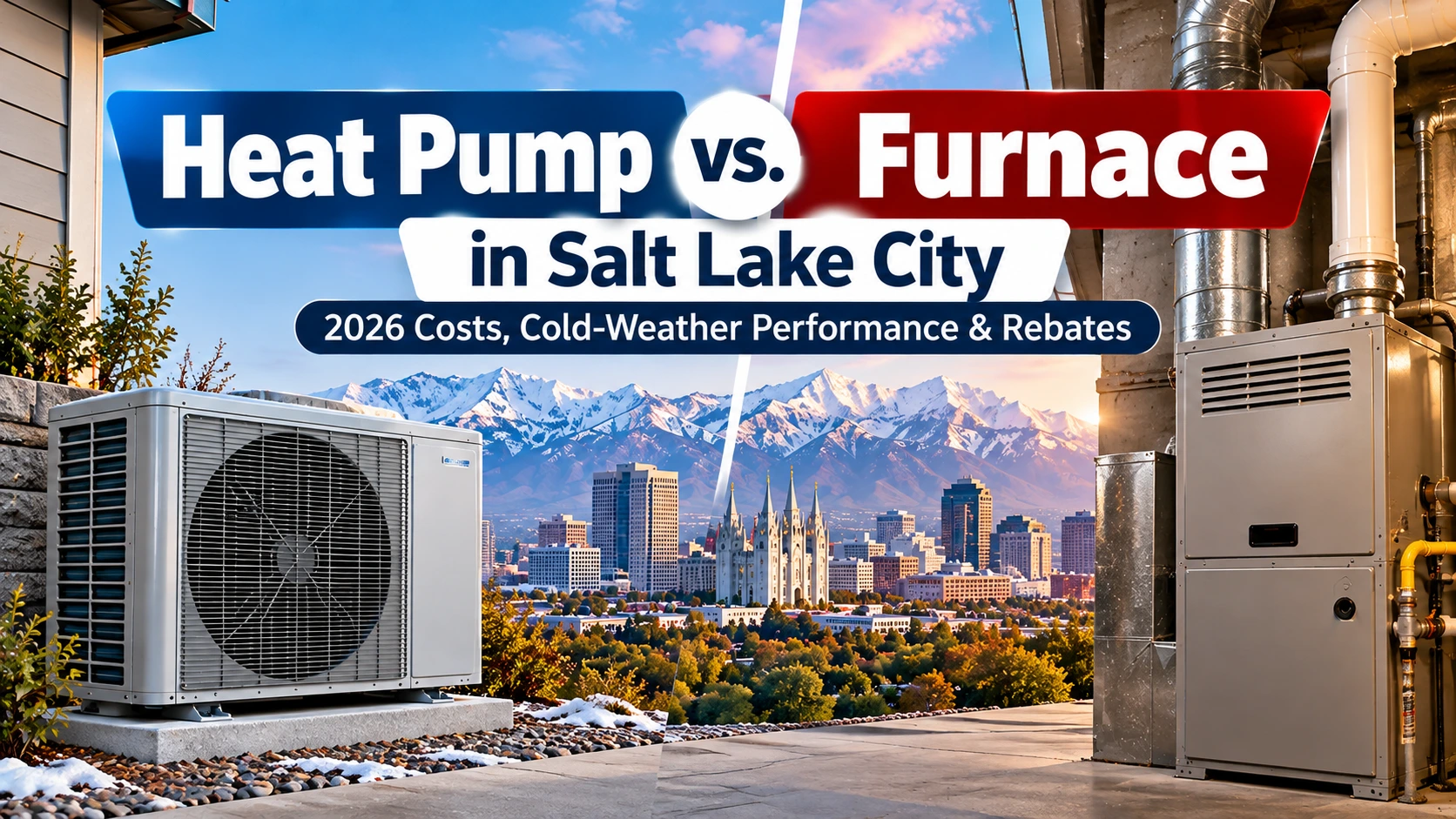
Heat Pump vs. Furnace in Salt Lake City: 2026 Costs, Cold-Weather Performance & Rebates
Choosing between a heat pump and a gas furnace depends on your home’s heating needs, installation budget, and winter temperatures. In Salt Lake City, cold winter nights, hot summers, and seasonal air pollution make system selection especially important.
This guide compares installation costs, energy use, cold-weather performance, and available incentives to help you decide which heating system fits your home.
Heat Pump vs. Furnace: What's the Difference?
A heat pump transfers heat rather than generating it through fuel combustion, while a gas furnace burns natural gas to heat your home. This difference affects energy use, cooling options, installation costs, and how each system performs during cold weather.
Heat pump: Provides heating and cooling through one system. It transfers heat indoors during winter and removes heat from your home during summer.
Gas furnace: Burns natural gas to provide heat. If your home already has central air conditioning, you can keep the existing AC if it remains suitable.
Dual-fuel system: Combines a heat pump with a gas furnace. The heat pump handles suitable conditions, while the furnace provides additional heat when needed.
For Salt Lake City homeowners, the main decision is whether a heat pump can meet the home’s heating demand on its own or whether gas backup offers better value.
What Are the Pros and Cons of a Heat Pump in Salt Lake City?
A heat pump can provide efficient heating and cooling, but its performance depends on the model, outdoor temperature, and home design. Before replacing your furnace, consider both its operating advantages and its installation requirements.
Heat Pump Advantages
Heating and cooling in one system: A heat pump can replace separate heating and cooling equipment when the existing setup is suitable.
High energy efficiency: Heat pumps move heat instead of creating it through combustion. Under suitable conditions, they can deliver multiple units of heat for each unit of electricity used.
No on-site fuel combustion: An electric heat pump does not burn natural gas inside your home, although electricity generation may still produce emissions.
Potential savings in mild weather: A properly selected heat pump may cost less to operate than a gas furnace during moderate temperatures.
Possible incentives: Some qualifying systems may be eligible for utility or government incentives, depending on current program rules.
Heat Pump Drawbacks
Cold-weather performance varies: Standard models may lose capacity as temperatures fall. Cold-climate models are designed to perform better in low temperatures.
Higher installation costs: Replacing a furnace with a heat pump may require changes to electrical equipment, ductwork, or other parts of the system.
Different maintenance needs: A heat pump operates in both heating and cooling seasons, so regular maintenance remains important throughout the year.
Backup heat may be needed: Some homes require supplemental heating during extreme cold, depending on the equipment and heating load.
Can a Heat Pump Handle Salt Lake City's Winter Temperatures?
Yes, a properly selected cold-climate heat pump can heat many Salt Lake City homes through winter, but the model’s capacity at low temperatures matters more than its general efficiency rating.
Some cold-climate models are designed to operate at temperatures well below freezing. However, their available heating capacity and efficiency vary by model, and performance can decline during extreme cold. Before choosing a heat pump, ask an HVAC contractor to assess:
Your home’s heating load and insulation.
The equipment’s heating capacity at low outdoor temperatures.
Ductwork condition and airflow.
Whether supplemental electric or gas heating is needed.
The system’s expected operating costs under local winter conditions.
A standard heat pump may still work for some homes, but it should not be selected without checking its performance against the home’s heating demand. Proper sizing and equipment selection are more useful than relying on a general temperature threshold.
Heat Pump vs. Furnace: 2026 Installation Costs
A furnace replacement often costs less upfront than installing a heat pump, while a dual-fuel system usually requires a larger initial investment. Actual pricing depends on equipment size, efficiency, ductwork, electrical requirements, and installation complexity.
The following figures are indicative estimates from the original draft, not verified current contractor quotes.
| Heating System | Estimated Installed Cost |
|---|---|
| High-Efficiency Gas Furnace | $4,500–$9,500 |
| Cold-Climate Heat Pump | $8,000–$15,000 |
| Dual-Fuel System (Heat Pump + Gas Furnace) | $10,000–$18,000 |
Note: These are indicative estimates, not verified contractor quotes. Actual costs depend on equipment, ductwork, electrical upgrades, and installation requirements.
Frequently Asked Questions
Will a heat pump keep my house warm on the coldest Wasatch Front nights?
A cold-climate heat pump, correctly sized, handles most Salt Lake winters. For the coldest snaps, a dual-fuel system (heat pump + gas furnace backup) gives you full peace of mind.
Can I keep my existing ductwork if I switch to a heat pump?
In most cases, yes. A technician should inspect your ducts for leaks, sizing, and insulation leaky ducts hurt heat pump performance more than furnace performance.
Do heat pumps help with Salt Lake City's winter inversion air quality?
Yes. Because a heat pump burns no fuel on-site, it adds zero combustion emissions to the valley’s trapped winter air unlike a gas furnace.