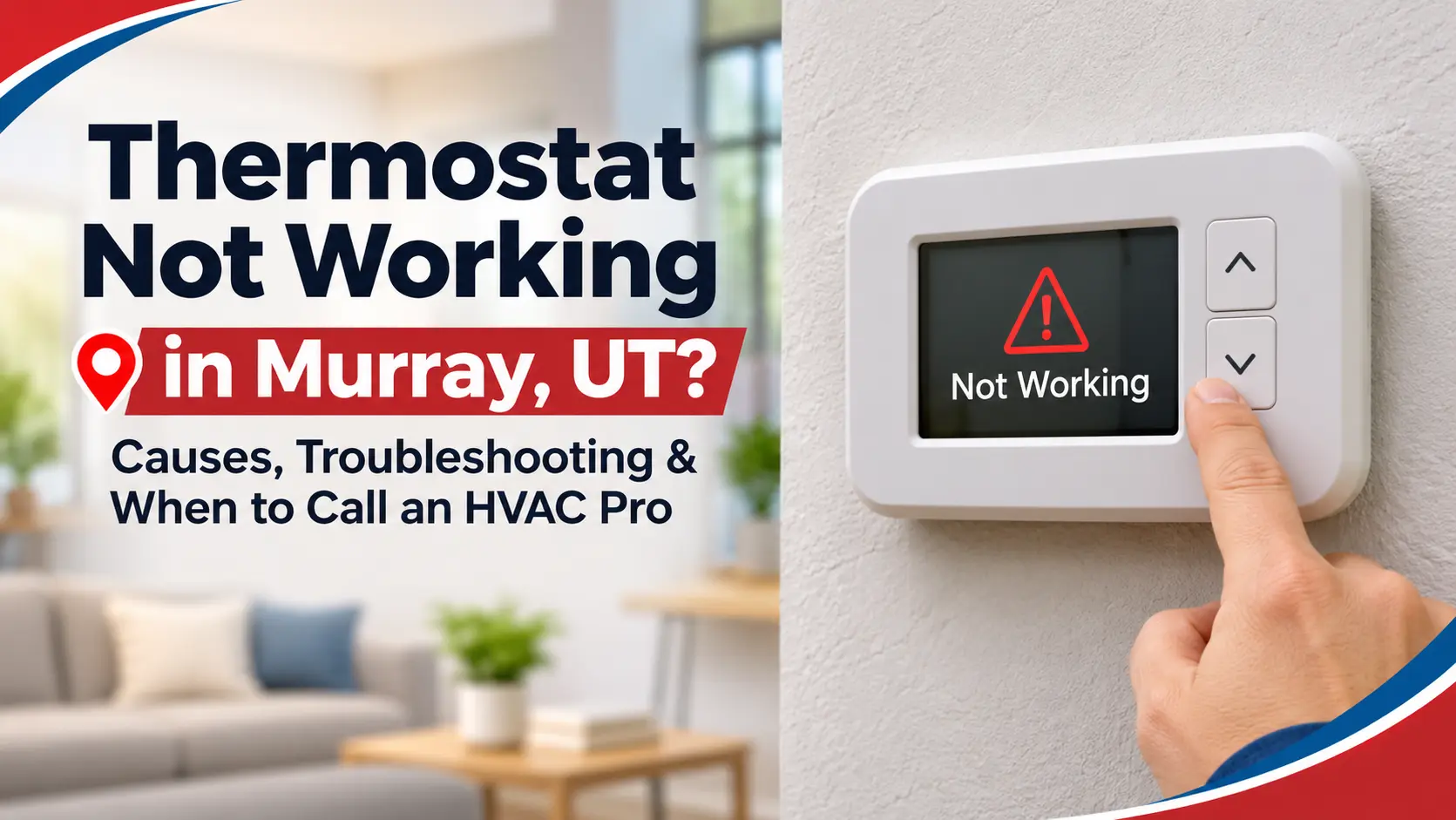
Thermostat Not Working in Murray, UT? Causes, Troubleshooting
A faulty thermostat can cause blank screens, incorrect temperature readings, short cycling, or heating and cooling problems in Murray homes. This guide covers common causes, safe troubleshooting steps, and when to seek professional thermostat repair in Murray, UT.
Common Signs Your Thermostat Is Not Working Properly
A faulty thermostat can affect how your furnace or air conditioner operates. Common warning signs include:
Blank screen: The thermostat display turns off or stops responding.
Incorrect temperature: The displayed reading does not match the room temperature.
Short cycling: Your HVAC system starts and stops more frequently than expected.
Heating or cooling problems: The thermostat will not switch between operating modes.
No system response: Your furnace or AC does not turn on after a temperature adjustment.
These symptoms can have different causes. A blank display may indicate a power issue, while short cycling can involve thermostat settings or another HVAC problem.
Why Is Your Thermostat Not Working?
A thermostat may stop working because of weak batteries, power interruptions, wiring problems, incorrect settings, or faulty components. Identifying the symptoms can help narrow down the possible cause.
Weak or Dead Batteries
Low batteries can cause a digital thermostat to display a warning, become unresponsive, or turn off completely. Replace them with the type recommended by the manufacturer. If the display remains blank, the problem may involve the thermostat’s power supply or another component.
Tripped Circuit Breaker
A tripped circuit breaker can interrupt power to your furnace or air conditioning system. Depending on the equipment, this may also affect thermostat operation. Check the relevant breaker in your electrical panel. If it trips again, leave it off and contact a qualified professional.
Low-Voltage Wiring Problems
Most residential thermostats communicate with HVAC equipment through a low-voltage control circuit. Loose connections, damaged wires, or interrupted signals can prevent the system from responding.
Wiring problems require proper testing. Avoid handling exposed connections or opening electrical compartments yourself.
Incorrect Thermostat Settings
Incorrect temperature settings, operating modes, or programmed schedules can make a working thermostat appear faulty. For example, a cooling schedule may prevent the furnace from responding when you expect heating.
Check the selected mode, temperature, and schedule. Follow the manufacturer’s instructions for your thermostat model.
Faulty Thermostat or HVAC Control Board
A damaged thermostat may send incorrect signals or stop communicating with your HVAC system. A faulty furnace control board can cause similar symptoms.
Both components need proper testing before replacement. This helps avoid replacing a working thermostat when the actual problem is inside the HVAC equipment.
Why Thermostat Screen Is Blank: What Could Be Wrong?
A blank thermostat screen usually indicates a power-related problem. Common causes include dead batteries, a tripped breaker, a furnace safety switch, a blown low-voltage fuse, or an interrupted C-wire connection.
Battery or Power Supply Problems
Start by checking whether your thermostat uses replaceable batteries. Install fresh batteries and confirm their position matches the manufacturer’s instructions. If the display remains blank, the thermostat may not be receiving power from the HVAC system. Further inspection may be needed.
Furnace Door Safety Switch
Many furnaces have a safety switch that prevents operation when the access panel is not properly installed. An open or incorrectly seated panel can interrupt furnace operation. Check whether the panel is properly closed. Never bypass or tamper with the safety switch.
Tripped Circuit Breaker
A tripped breaker can cut power to the HVAC equipment and affect thermostat operation. Look for a breaker that has moved from its normal position. If it trips repeatedly, do not keep resetting it. Repeated trips may indicate an electrical or equipment problem that needs professional attention.
Blown HVAC Fuse
Some HVAC systems use low-voltage fuses to protect their control circuits. A blown fuse can interrupt communication between the thermostat and heating or cooling equipment. The reason for the blown fuse should be identified before replacement. A qualified HVAC professional can inspect the circuit and determine what caused the problem.
Smart Thermostat and C-Wire Issues
Many smart thermostats need continuous power for their displays, Wi-Fi connections, and other features. A C-wire, or common wire, provides this power in compatible HVAC systems. Not every thermostat requires a C-wire. Check the manufacturer’s power requirements and equipment compatibility before choosing a replacement.
Thermostat Showing the Wrong Temperature or Causing Short Cycling?
Incorrect temperature readings can result from poor thermostat placement, blocked airflow, or calibration problems. Short cycling may involve thermostat settings or a separate HVAC equipment issue.
Common causes include:
Poor placement: Direct sunlight, windows, and nearby heat sources can affect temperature readings.
Blocked airflow: Furniture or curtains can interfere with the thermostat’s temperature sensor.
Calibration issues: Incorrect temperature calibration can cause inaccurate readings.
Incorrect settings: Thermostat configuration may contribute to frequent system cycling.
HVAC problems: Restricted airflow or equipment faults can also cause short cycling.
If your furnace or AC repeatedly turns on and off, have the system inspected to identify the actual cause.
What Can Murray Homeowners Safely Check Themselves?
Murray homeowners can perform basic thermostat checks without opening electrical compartments or handling HVAC wiring. Start with these simple steps:
Replace thermostat batteries if required.
Check the heating or cooling mode.
Review the temperature and schedule settings.
Inspect the accessible circuit breaker.
Check whether the air filter needs replacement.
Make sure the furnace access panel is properly closed.
If these checks do not resolve the problem, stop troubleshooting. Leave internal wiring, fuses, and control board inspections to qualified professionals.
Frequently Asked Questions
Why Is My Thermostat Blank After I Changed the Batteries?
The thermostat may remain blank because of incorrect battery installation, interrupted power, or an internal fault. Check the battery position and manufacturer’s instructions first. If the display stays off, further inspection may be needed.
Does a Smart Thermostat Need a C-Wire?
Many smart thermostats need a C-wire for continuous power, but requirements vary by model. Check the manufacturer’s compatibility guide before purchasing or installing a replacement.
Can a Faulty Thermostat Cause HVAC Short Cycling?
Yes, incorrect settings, sensor problems, or faulty temperature readings can contribute to short cycling. Restricted airflow and other HVAC faults can also cause the same problem.
How Do I Know If My Thermostat Needs Replacement?
Persistent display problems, inaccurate readings, and unresponsive controls may indicate a faulty thermostat. However, power supply or HVAC equipment problems can cause similar symptoms.