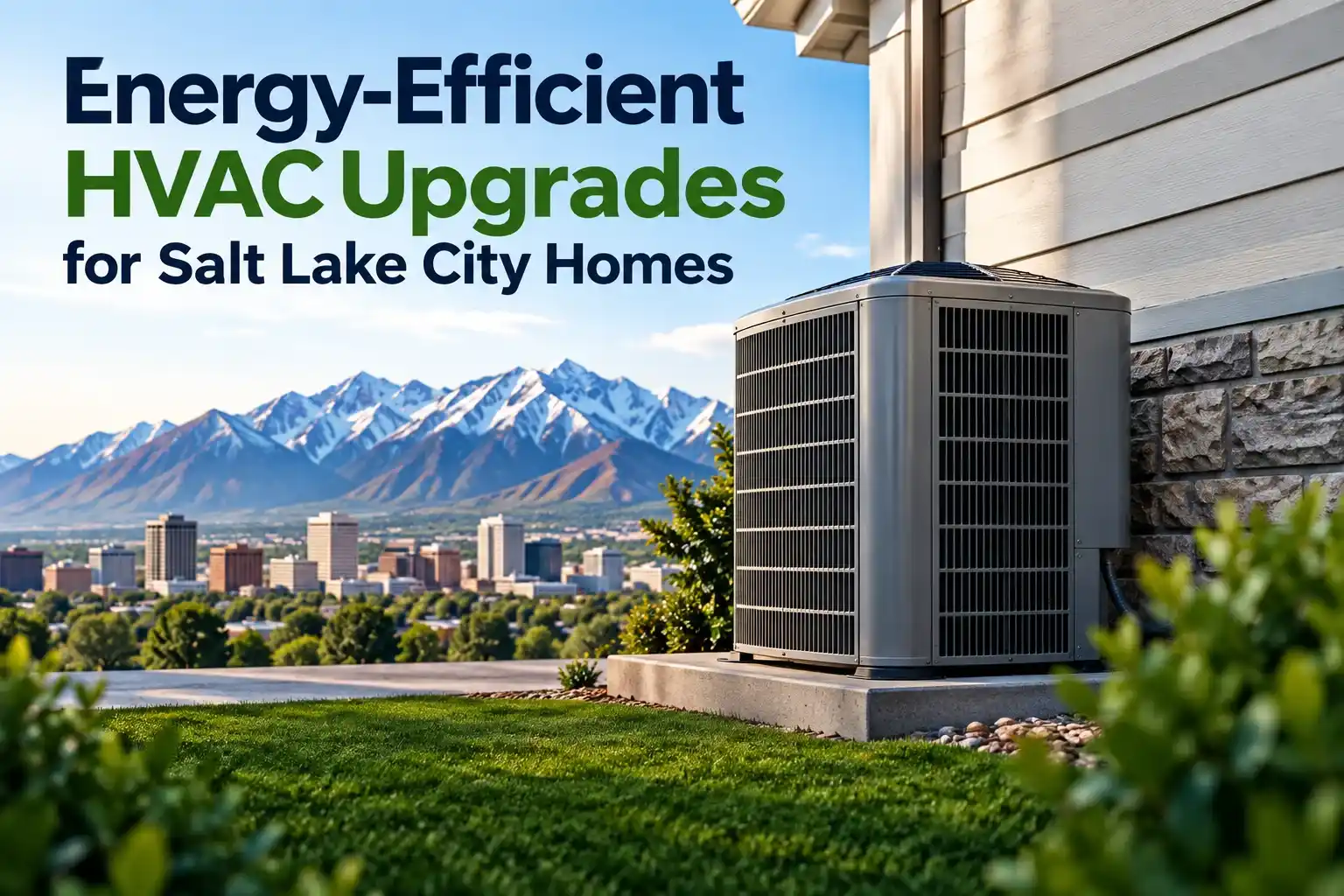
Energy-Efficient HVAC Upgrades for Salt Lake City Homes
If you are planning an HVAC upgrade, choosing the right improvement can help lower energy use and improve comfort throughout your home. This guide explains energy-efficient HVAC upgrades in detail, including high-efficiency furnaces, AC systems, heat pumps, smart thermostats, ductwork, insulation, costs, savings, rebates, and how to decide which upgrade makes sense for your Salt Lake City home.
Which HVAC Upgrades Save the Most Energy?
The most effective HVAC upgrades depend on where your home is losing energy and how well your current system performs. Replacing an aging system can provide major efficiency gains, while duct sealing, insulation, thermostat controls, or zoning may offer better value for homes with newer equipment.
Replace an Aging System
Replacing an older furnace or air conditioner with a high-efficiency system can reduce energy use when the existing equipment is inefficient, worn, or nearing replacement age.
Seal Leaky Ducts
Leaky ductwork can allow conditioned air to escape before it reaches your rooms. Sealing leaks and improving duct insulation can help the system deliver more heating and cooling where it is needed.
Improve Insulation
Poor insulation increases heat transfer through the attic, walls, and other parts of the home. Improving insulation can reduce the workload on your furnace and air conditioner throughout the year.
Upgrade Thermostat Controls
A programmable or smart thermostat can reduce unnecessary heating and cooling by adjusting temperatures around your daily schedule. It can also provide better control over HVAC operation.
Add HVAC Zoning
HVAC zoning can help homes where different rooms or floors need different temperatures. Separate zone controls allow the system to condition specific areas instead of treating the entire home the same way.
How Energy Efficient Is Your Current HVAC System?
Your current HVAC system may be using more energy than necessary if it is old, inefficient, frequently repaired, or struggling to maintain indoor temperatures. Checking its age, efficiency rating, energy bills, and repair history can show whether an upgrade is worth considering.
Before replacing equipment, look at how the system performs in your home. A newer system may not solve high energy use if duct leaks, poor insulation, airflow problems, or incorrect sizing are also affecting performance.
System Age
Older HVAC equipment generally has lower efficiency than many newer models. If your furnace or air conditioner is approaching the end of its expected service life, compare its current performance with newer high-efficiency options.
SEER2 Rating
SEER2 measures the seasonal cooling efficiency of an air conditioner or heat pump. A higher SEER2 rating generally indicates greater cooling efficiency, although actual energy use also depends on system size, runtime, weather, and installation.
AFUE Rating
AFUE shows how efficiently a gas furnace converts fuel into usable heat. A higher AFUE percentage means more of the furnace’s fuel becomes heat for your home, making this rating useful when comparing furnace replacement options.
Energy Bills
Rising heating or cooling bills can indicate higher system runtime, declining equipment efficiency, poor insulation, duct losses, or changing household usage. Compare bills across similar seasons before deciding that the HVAC system itself is responsible.
Frequent Repairs
Frequent repairs can signal that an aging HVAC system is becoming less economical to operate. If repair costs keep increasing while efficiency and comfort decline, compare continued repairs with the cost and expected savings of replacement.
What Do SEER2, EER2, and AFUE Mean?
SEER2, EER2, and AFUE are efficiency ratings that help homeowners compare HVAC equipment before choosing an upgrade. SEER2 and EER2 apply mainly to cooling performance, while AFUE measures how efficiently a gas furnace converts fuel into heat.
SEER2
SEER2 measures the seasonal cooling efficiency of an air conditioner or heat pump. A higher rating generally means the equipment can provide cooling with less electricity under standardized testing conditions.
EER2
EER2 measures cooling efficiency under specific operating conditions rather than across an entire cooling season. It can help compare equipment performance when outdoor temperatures and indoor conditions are fixed.
AFUE
AFUE measures how efficiently a gas furnace converts fuel into usable heat. For example, a furnace with a 95% AFUE rating converts about 95% of its fuel into heat, with the remainder lost during operation.
HSPF2
HSPF2 measures the heating efficiency of heat pumps over a defined heating season. When comparing heat pump options, homeowners can consider HSPF2 alongside SEER2 to evaluate both heating and cooling performance.
When Should You Upgrade Your Air Conditioner?
Upgrading your air conditioner can make sense when an older system uses more electricity, needs frequent repairs, or struggles to keep your Salt Lake City home comfortable. Before replacing it, consider the system’s age, efficiency rating, cooling performance, and installation condition.
Older AC Systems
Older air conditioners may have lower efficiency than newer models, especially when they have been operating for many years. If repair needs are increasing, compare continued repairs with the cost of a newer system.
High Cooling Bills
Unusually high summer electricity bills can have several causes, including an inefficient AC, duct leakage, poor insulation, or excessive system runtime. Check these factors before assuming equipment replacement is the only solution.
Uneven Cooling
Rooms that remain warmer or cooler than others can point to airflow restrictions, duct problems, insulation gaps, or incorrect equipment sizing. Fixing these issues may improve comfort without immediately replacing the entire system.
Variable-Speed AC
Variable-speed air conditioners can adjust their output based on the home’s cooling demand rather than operating only at full capacity. This can improve temperature control and reduce electricity use under suitable conditions.
Proper System Sizing
An air conditioner should be sized according to the home’s cooling load rather than simply choosing a larger unit. Oversized equipment can cycle too often, while undersized equipment may run excessively during hot Salt Lake City weather.
Are Heat Pumps a Good HVAC Upgrade in Salt Lake City?
Heat pumps can be a useful HVAC upgrade in Salt Lake City because one system can provide both heating and cooling throughout the year. Their suitability depends on the home’s heating needs, existing HVAC setup, insulation, electrical capacity, and the specific heat pump selected.
Heating Performance
Modern heat pumps can provide efficient heating during colder weather, but performance varies with outdoor temperature and equipment design. Cold-climate models are designed to maintain heating capacity at lower temperatures.
Cooling Performance
A heat pump also works as an air conditioner during warmer months. This allows one system to handle both seasonal heating and cooling instead of using separate equipment.
Cold Weather Operation
Cold-weather performance should be considered when choosing a heat pump for a Salt Lake City home. Check the manufacturer’s rated heating capacity at low outdoor temperatures and whether supplemental heat is included for colder conditions.
Heat Pump vs. Furnace
A heat pump moves heat rather than creating heat by burning fuel, while a gas furnace produces heat through combustion. The better option depends on energy costs, existing equipment, home requirements, and installation conditions.
Dual-Fuel Systems
A dual-fuel system combines a heat pump with a furnace and can switch between them based on outdoor conditions or system controls. This setup can provide another option for homes that need both electric heat pump operation and furnace heating.
Frequently Asked Questions
What is the most cost-effective HVAC upgrade?
The most cost-effective HVAC upgrade depends on the source of energy loss in your home. Duct sealing, insulation, thermostat improvements, or equipment replacement may provide better value depending on system age and condition.
Is replacing an old HVAC system worth it for energy savings?
Replacing an older, inefficient system can reduce energy use when the equipment has declining performance or high operating costs. Compare the expected savings with installation costs before deciding.
Does duct sealing really reduce energy use?
Yes, sealing significant duct leaks can reduce the amount of conditioned air lost before reaching your living spaces. The potential benefit depends on the amount and location of existing leakage.
Is a heat pump efficient in Salt Lake City?
A properly selected heat pump can provide efficient heating and cooling in Salt Lake City. Cold-weather performance, system sizing, supplemental heat, insulation, and the home’s heating requirements should be considered before installation.
Should I upgrade my thermostat or HVAC system first?
If your HVAC system is relatively new and working properly, improving thermostat controls may be a practical first step. An aging or inefficient system may justify equipment replacement instead.
![Spring AC Tune-Up Checklist for Sandy, UT Homeowners [2026]](https://zephyrheatingandcooling.com/wp-content/uploads/2026/09/Spring-AC-Tune-Up-Checklist-for-Sandy-UT-Homeowners-2026.webp)