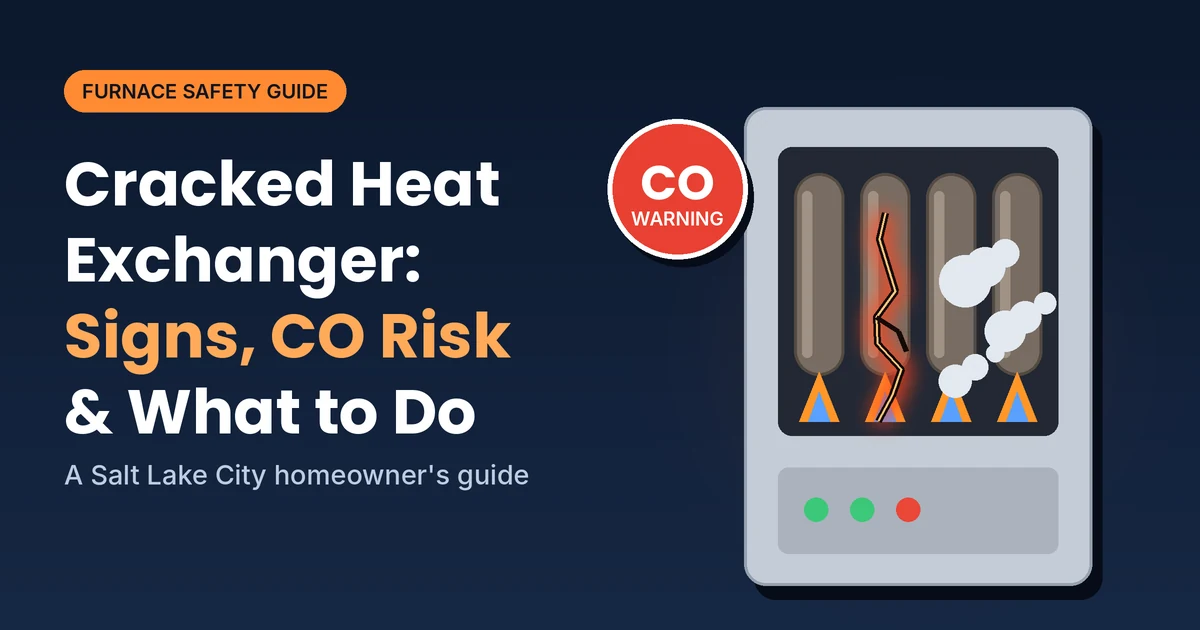
Cracked Heat Exchanger, Signs, CO Risk & What to Do?
In this guide, we will guide you through the warning signs of a cracked heat exchanger, the real carbon monoxide risk, and what to do next. You will also learn how to check a diagnosis before you pay for a new furnace, with tips from our Salt Lake City team.
What Is a Furnace Heat Exchanger?
A furnace heat exchanger transfers heat from burning gas to the air circulating through your home. The blower moves air across the hot metal and sends it through your vents, while exhaust gases leave through the flue pipe, separated from your indoor air by a metal wall.
Most high-efficiency furnaces rated at 90% AFUE or higher have two heat exchangers: a primary and a secondary that captures extra heat from the exhaust. Both can crack over time, so a proper furnace inspection should check both components.
Why Is a Cracked Heat Exchanger Dangerous?
A cracked heat exchanger can allow exhaust gases containing carbon monoxide (CO) an odorless, colorless gas to mix with indoor air. The CDC reports that more than 400 people in the United States die each year from non-fire-related carbon monoxide poisoning.
Utah faces added winter concerns because furnaces often run from October through April while homes remain tightly sealed during inversion season. A cracked heat exchanger can also create a fire risk if escaping air pushes flames toward nearby materials, including drywall.
8 Warning Signs of a Cracked Heat Exchanger
You cannot see the heat exchanger without taking your furnace apart, but your furnace and your body can still give you some clear clues. None of these signs proves a crack on its own, yet each one is a good reason to call a licensed pro for an inspection.
1. Your CO Alarm Goes Off
This is the clearest warning you will ever get, so leave the house with everyone inside and call 911 as soon as you are outside. Once firefighters say the home is safe, have your furnace and every other gas appliance checked before anyone turns the heat back on.
2. Headaches or Nausea That Go Away When You Leave
Low levels of carbon monoxide feel a lot like the flu without a fever, bringing headaches, dizziness, nausea, or a heavy, worn-out feeling. The big clue is the pattern, where you feel better at work or outside and then feel worse again soon after you come home. If more than one person feels this way, or your pets seem slow and sleepy too, treat it as an emergency and get help.
3. A Yellow, Lazy, or Dancing Burner Flame
A healthy gas flame looks crisp and blue, while a yellow or orange flame can mean the gas is not burning cleanly inside the furnace. Watch the flame when the blower turns on, because if it bends, rolls, or jumps, air may be pushing through a crack into the burners. Technicians call this the blower test, and it is one of the simplest ways to spot a problem without taking anything apart.
4. Soot or Dark Stains Around the Furnace
Black or brown marks on the furnace cabinet, near the burners, or around the flue pipe usually point to fuel that is not burning the right way. Soot showing up around your supply vents is another sign to take seriously, since it means combustion byproducts may be reaching your living space.
5. Rust or Corrosion Inside the Burner Area
Rust flakes on the burners or inside the furnace cabinet can mean moisture has been slowly eating away at the metal for quite a while. On high-efficiency furnaces, a clogged or leaking condensate drain line is a common cause, and the secondary heat exchanger often takes the most damage.
6. A Sharp, Chemical Smell When the Heat Runs
Some homeowners describe this smell as sharp, like formaldehyde, and it is very different from the dusty smell you notice on the first cold day. That dusty smell fades within an hour or so, but a chemical smell that keeps coming back every time the heat runs needs a professional check.
7. New Popping, Rattling, or Banging Sounds
Metal grows when it heats and shrinks when it cools, so a cracked section can pop, tick, or rattle as it moves during each heating cycle. A loud boom at startup is different, because that is often delayed ignition, and over time those small blasts can crack a heat exchanger too.
8. Weak Heat and Rising Gas Bills
A damaged heat exchanger moves heat poorly, so your furnace runs longer to reach the set temperature and some rooms may never feel warm enough. You may also see your Enbridge Gas bill climb even though your habits and thermostat settings have stayed exactly the same as last winter.
What Causes a Heat Exchanger to Crack?
Most cracks come from age and heat stress, because the metal grows a little every time the furnace runs and shrinks again when it shuts off. After 15 to 20 years of that movement, the metal wears out and can split, a lot like a paperclip bent back and forth until it snaps.
Several common problems can speed up that wear and cause a crack much sooner than the normal lifespan of a well-kept furnace would suggest. Most of them come down to airflow, moisture, or a furnace that was sized or set up the wrong way.
- Dirty air filters. A clogged filter chokes airflow, so the metal overheats and the high limit switch keeps shutting off the burners, which can also make your furnace blow cold air.
- Closed or blocked vents. Closing vents in empty rooms saves very little money, and it raises pressure inside the ducts and traps extra heat inside the furnace cabinet.
- A furnace that is too big. An oversized furnace heats the house fast, shuts off, and starts again minutes later, and every extra start adds another heat cycle to the metal.
- Moisture. On high-efficiency furnaces, a clogged condensate drain line can let water sit inside the unit, where it slowly rusts the secondary heat exchanger.
- Delayed ignition. When gas builds up before it lights, it makes a small boom inside the furnace, and those repeated booms put sudden stress on the metal walls.
Does a Crack Always Mean Carbon Monoxide Is in Your Home?
Most cracks come from age and heat stress, because the metal grows a little every time the furnace runs and shrinks again when it shuts off. After 15 to 20 years of that movement, the metal wears out and can split, a lot like a paperclip bent back and forth until it snaps.
Several common problems can speed up that wear and cause a crack much sooner than the normal lifespan of a well-kept furnace would suggest. Most of them come down to airflow, moisture, or a furnace that was sized or set up the wrong way.
- Dirty air filters. A clogged filter chokes airflow, so the metal overheats and the high limit switch keeps shutting off the burners, which can also make your furnace blow cold air.
- Closed or blocked vents. Closing vents in empty rooms saves very little money, and it raises pressure inside the ducts and traps extra heat inside the furnace cabinet.
- A furnace that is too big. An oversized furnace heats the house fast, shuts off, and starts again minutes later, and every extra start adds another heat cycle to the metal.
- Moisture. On high-efficiency furnaces, a clogged condensate drain line can let water sit inside the unit, where it slowly rusts the secondary heat exchanger.
- Delayed ignition. When gas builds up before it lights, it makes a small boom inside the furnace, and those repeated booms put sudden stress on the metal walls.
Frequently Asked Questions
Can I run my furnace with a cracked heat exchanger?
No, you should turn the furnace off and leave it off until a licensed technician has checked it and confirmed whether the crack is real. Even if your CO reading is zero today, the crack can grow or start leaking when the blower runs, snow blocks a vent, or pressure changes.
Is a cracked heat exchanger a common HVAC scam?
It can be, because some companies use a cracked heat exchanger diagnosis to sell new furnaces, and Salt Lake City has seen this in the news. Real cracks still happen, so ask for a photo of the crack, its exact location, and written CO readings, and get a second opinion without them.
How long does a heat exchanger last?
A heat exchanger usually lasts about as long as the furnace itself, which is around 15 to 20 years when the system gets yearly maintenance. Overheating from a dirty filter, blocked vents, or a furnace that is too big for the house can shorten that lifespan by several years.
How often should my heat exchanger be inspected?
Your heat exchanger should be inspected once a year, ideally as part of a fall tune-up before you start running the heat every day. In Salt Lake City, September or early October is a great time, because it gives you room to fix problems before the first cold snap arrives.